
Visual Supports that help more learners participate
Classroom instructions are often delivered quickly and verbally: take out your book, turn to a page, copy the heading, complete the first task and wait quietly. Many students can follow this sequence. Others may miss a step, forget what comes next or become anxious because the expectations are not visible. Visual supports make information easier...
Classroom instructions are often delivered quickly and verbally: take out your book, turn to a page, copy the heading, complete the first task and wait quietly. Many students can follow this sequence. Others may miss a step, forget what comes next or become anxious because the expectations are not visible.
Visual supports make information easier to revisit. They can reduce the amount students must hold in working memory and provide another way to understand a message.
Visual supports are communication tools
A visual support may be a daily schedule, first–then card, choice board, task strip, labelled classroom area, worked example or simple symbol beside an instruction. Its purpose is to make information clearer, not to decorate the room.
The most useful support answers a real question for the learner: What is happening? What do I need to do? How much is left? What choices do I have? What can I do if I need help?
Predictability can increase participation
Unexpected changes and unclear transitions can take a great deal of attention. A visible schedule allows students to check what is coming and notice when an activity is complete. When plans change, updating the schedule makes the change concrete.
Predictability does not mean every day must be identical. It means students have accessible information about what is expected. That can free more attention for learning.
Use the least complicated support that works
A visual support does not need detailed artwork or many symbols. For some students, a written checklist is enough. Others benefit from photographs, simple line drawings, colour coding or objects. Choose the format that matches the learner’s current understanding.
Keep the display uncluttered and place it where it will be used. A beautifully designed card inside a teacher folder is not supporting the student during the task.
Teach students how to use it
Simply displaying a visual support does not guarantee that students will understand its purpose. Introduce it directly. Point to each step, model checking it, and prompt students to return to it. Gradually reduce adult reminders as the support becomes familiar.
The goal is not dependence on a picture forever. The goal is access and increasing independence. Some supports may be faded; others may remain useful, just as adults continue to use calendars, maps and checklists.
Make supports available without stigma
Many visual tools can be offered to the whole class. A task sequence on the board, a classroom schedule or a choice of response formats may help students with language, attention, anxiety, executive functioning or simply a busy morning.
Individual supports can still be provided when needed, but a classroom culture that treats visual information as normal makes it easier for students to use what helps them.
Review whether the support is doing its job
A support should make participation clearer or more independent. If a student continues to struggle, consider whether the visual is too complex, too abstract, poorly placed or linked to an expectation that is itself unclear.
Visual supports are most effective when they respond to a genuine barrier. Used thoughtfully, they can make routines, communication and learning more accessible—and create a classroom in which more students know what to do and feel able to begin.
Explore Brontosaurus Learning visual-support resources designed for practical use in inclusive classrooms.
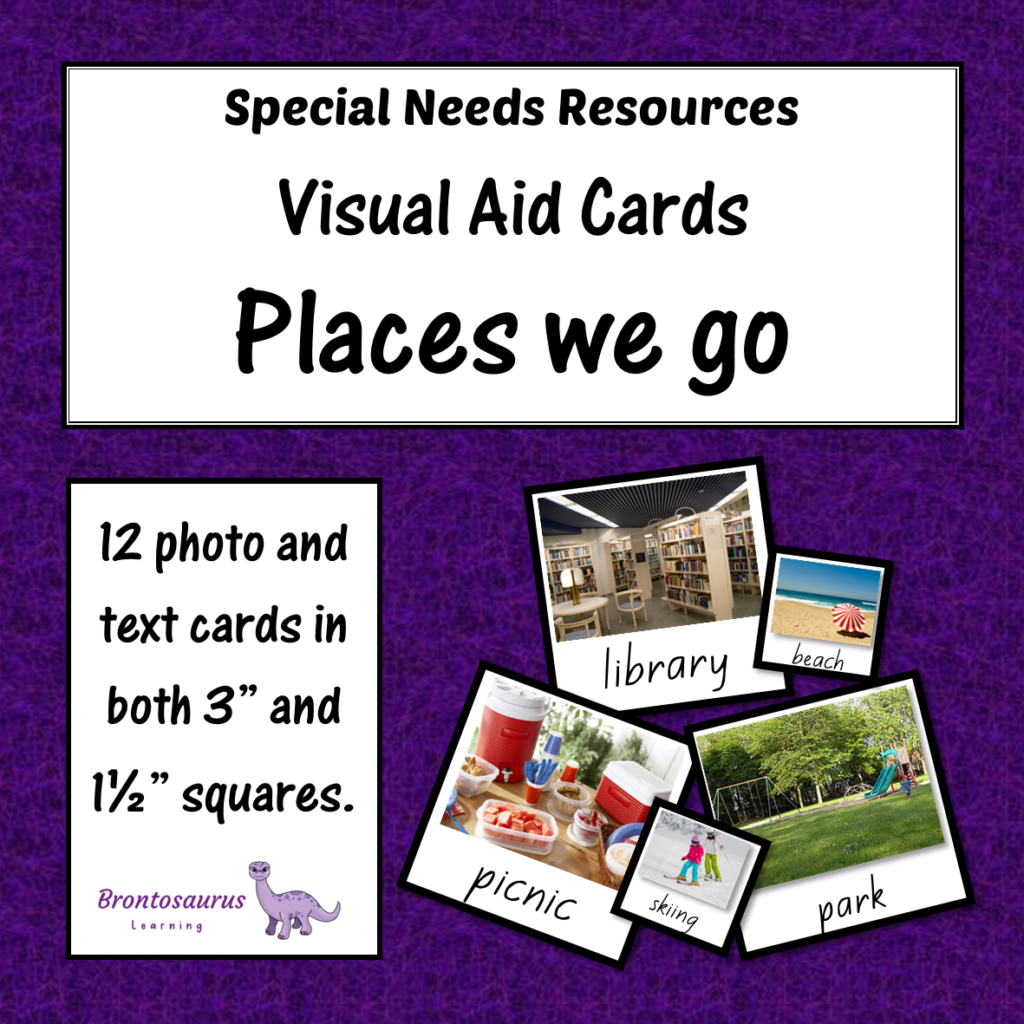
Related classroom resource
Visual Aid Cards – Places We Go
12 photo and text cards in both 3″ and 1 1/2″ squares that support communication and learning in so many different ways.
Continue Exploring

Why Hands-On Science Matters for Young Learners
Discover why hands-on experiments support science learning in the primary classroom and how to keep practical investigations purposeful.
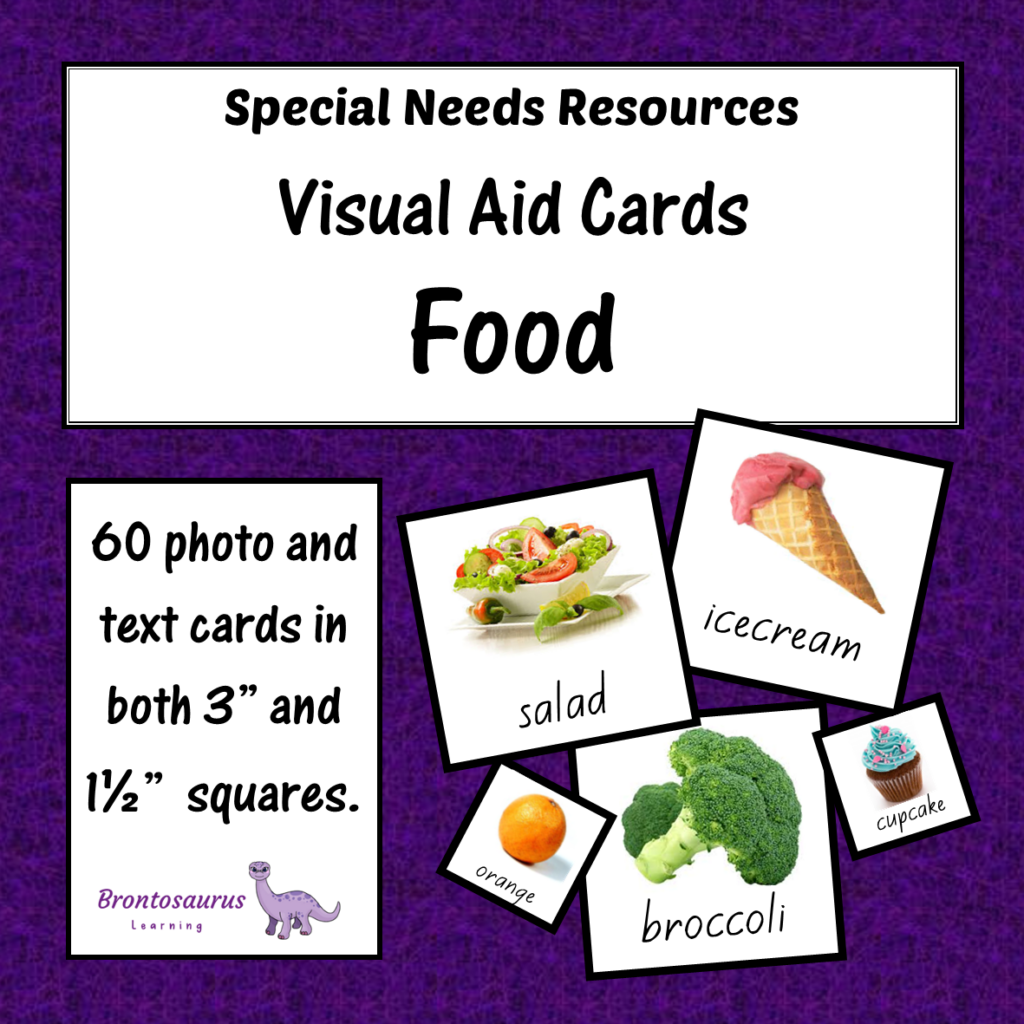
Visual Aid Cards – Food
60 photo and text cards in both 3″ and 1 1/2″ squares that support communication and learning in so many different ways.
Classroom Displays That Teach, Not Just Decorate
Learn how to create purposeful classroom displays that support learning, reduce clutter and remain useful throughout a unit.